
A decade later, and now living in rural Islamabad, a friend insisted that I write about art again and put me in touch with DAWN’s art editor. Believing in her confidence in me more than my own, I re-entered Pakistan’s art world. Beyond reaffirming my longstanding admiration for the country’s artists, this work confronted me with a persistent question that had hovered in the previous years: when, if ever, would I stop feeling like an outsider? This time, the issue was not linguistic or domestic. I was settled, able to converse in Urdu reasonably well, and deeply invested in the cultural landscape around me. Yet the question of legitimacy lingered. If I wished to engage more fully with the artistic and literary spheres of Pakistan, how was I to overcome this feeling that I stood at the periphery? More troublingly, am I occupying space that ought to belong to a local writer?
With a background in international relations and history, I am acutely aware of the region’s colonial past. I have become accustomed to the occasional whisper—of that gora in the workplace—but a deeper anxiety persists: the fear of inadvertently assuming the position of the coloniser, of becoming an interloper in a cultural sphere that is already fragile and underrepresented. I hesitate even to articulate the thought, yet it recurs: what if my acceptance as an art writer is shaped, at least in part, by my identity as an outsider?
These questions have led me to reflect on our relationship to place and culture, on the extent to which birth and citizenship shape our identities, and on how artists and writers, and their works, are often anchored to their place of origin. For some, an association with a particular culture may carry advantages. But it also raises concerns. For artists with less ambiguous ties to “place,” or Pakistani artists seeking to engage with global audiences, does their experience mirror my own?
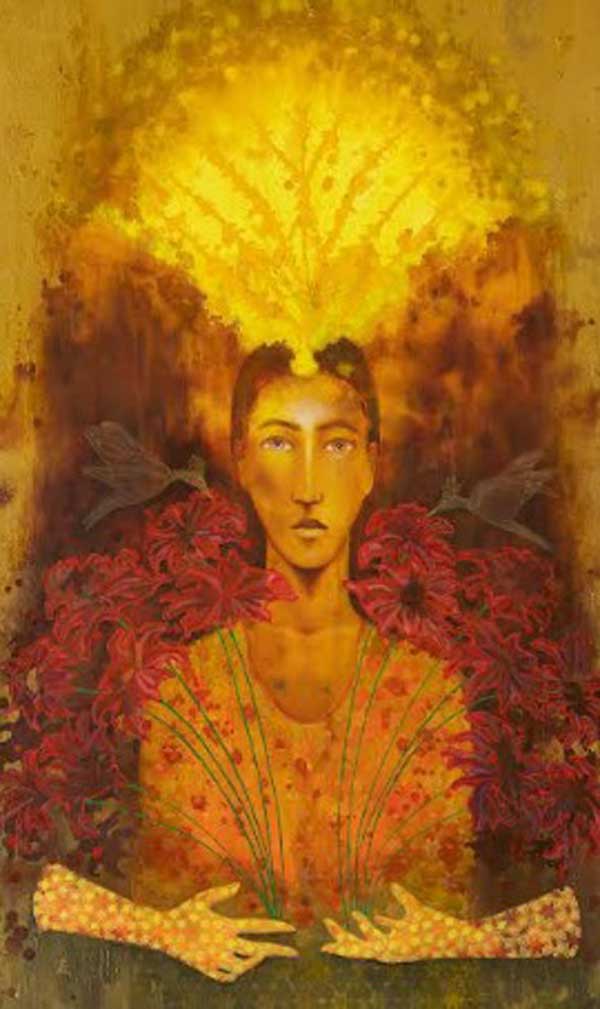
To help unravel these questions, I turn to two artists. Aafia Ali Shah, born of Australian and Pakistani parents, understands the challenges of cultural identity rooted in place. Sana Arjumand brings the experience of attempting to disentangle her art from origins entrenched in cultural signifiers, to something more focused on the experience of being just a human.
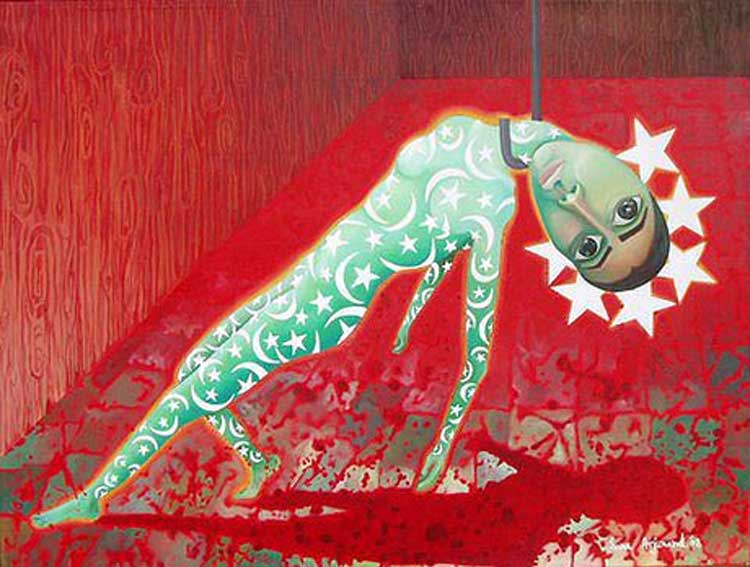
Can You Make Me a Star? exemplifies art steeped in cultural signifiers. With crescents and stars styled like the Pakistani flag, we are let into the artist’s disquiet. This reflects how stifled Arjumand felt during a time in her career. While discussing her experiences with culture and of finding a place in the international art scene, Arjumand identifies the double-edged sword of being labelled and boxed by one’s nationality and culture. She tells me:
“In my early career, I explored themes strongly related to my cultural identity. This work was very popular; so much so that I felt beholden to that, captured in a sense by the audience expectation to replicate these themes; it was all anyone wanted from me. It ended up stifling my creativity to such a degree that I considered leaving my art practice.”
“Rediscovering my spirituality and exploring broad themes of human experience has allowed me to find myself through my art again. I no longer feel the need to include reference to my national and cultural identity in my work, but this is not to say that these conversations don’t still follow me, especially at an international level. I’m always introduced as a ‘Pakistani artist’ and in some ways this can be beneficial, because it’s something rare, something that distinguishes me, but I also don’t want my work to be reduced to this kind of tokenism.” 2
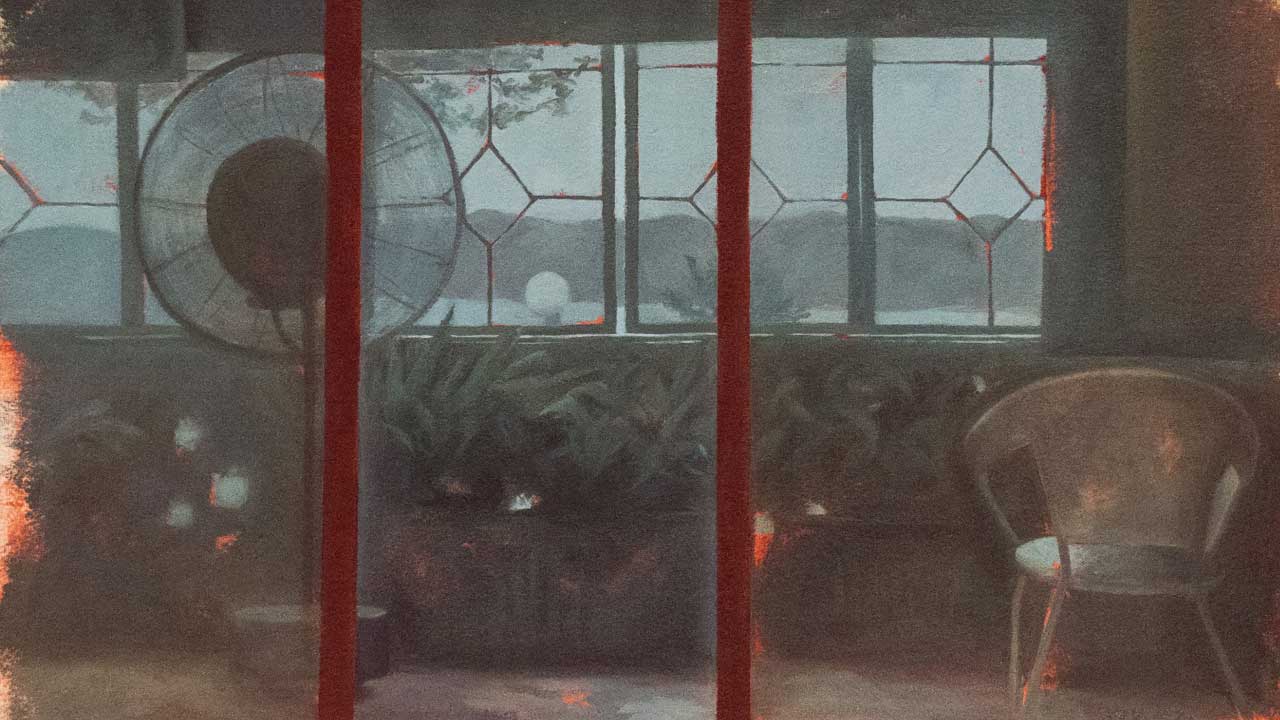
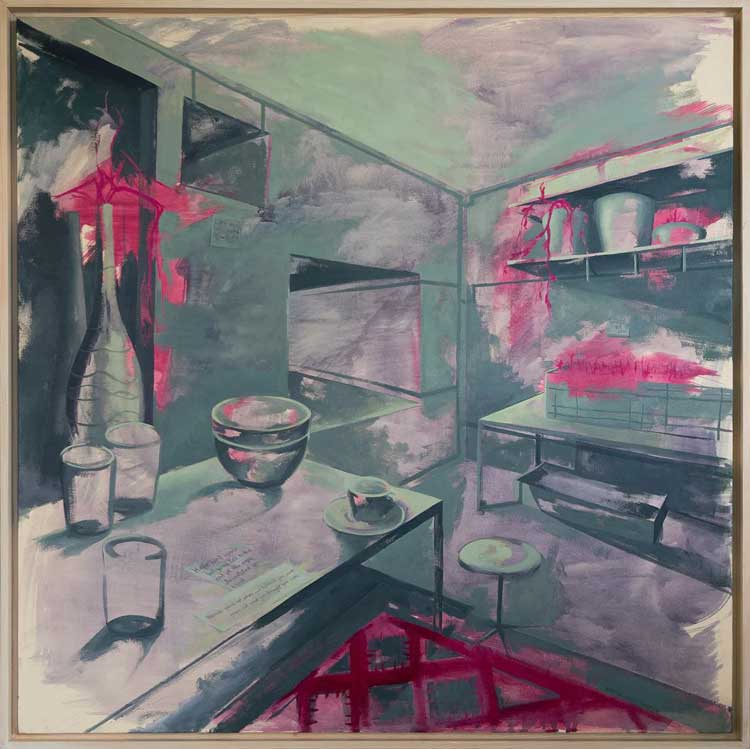
Australian Pakistani artist and recent winner of the 2025 Arjumand Painting Award, Aafia Ali notes how Pakistani art highlights a collective visual language that permeates naturally in artists’ work. For example, motifs inspired from traditional Mughal manuscripts and calligraphy are embedded in the art practices of many Pakistani artists. But Ali Shah’s The Waiting Room shows no culturally associated imagery, either Australian or Pakistani. Rather, a haunting other space is present where unfinished edges hint at the transience of this world. She says:
“I believe strongly in the mutual benefits that artists can gain from being in conversation with one another. In Pakistan, where you studied is the first thing a new face will ask you and, being an early-career artist who studied overseas, my response has resulted in some comedic dead-ends to conversations.”3
While there is an acknowledgement of educational lineage in the Pakistani art scene, Ali Shah’s experience of working in Australia was quite contrasting: artists with a diverse range of backgrounds that emphasise life experience over educational pedigree are afforded more opportunities. One’s schooling in art did not carry the same reverence as it does in Pakistan. However, many institutions favour highlighting the work of culturally diverse artists which gave Ali Shah an edge, but also placed her in a difficult position:
“I don’t wish for cultural or identity-driven conversations to follow my work, much less to be its whole worth.” But the process of art-making sections out a place and time where nonconcrete aspects of our reality, aspects which we have no way to speak about in full nuance and colour, like culture and like beauty, can be reinforced within ourselves and shared with other eyes,” she says.
Ali Shah’s experience and her views on culture and heritage offer a more forward-looking perspective, where artists are the conduit for carrying cultural history, but not beholden to it, and where connection is the highest form of artistic communication. She says, “Maybe if art is an effort to calibrate artist with art-viewer, human with human, culture is the history of connection, the living spring of all past efforts. To be part of carrying that forward, I suppose, must then be the pursuit to perfect human connection.”
Reflecting on these experiences of artists negotiating local and global art worlds, and in my own questions of belonging, the same tension emerges: Culture anchors and confines, connects and delineates. Whether one is a permanent resident, a globally mobile artist, or an internationally recognised practitioner, the act of creating and engaging with art becomes a negotiation between inherited histories and chosen affinities. I resonate with Ali Shah’s and Arjumand’s sentiment of not wanting culture to be the definitive story of my life, while appreciating how neither artist is rejecting their cultural affiliations.
What unites our perspectives is not a fixed cultural identity, but a shared sense of standing at the threshold: inside enough to appreciate and understand, outside enough to see clearly. Perhaps, the task is not to resolve this position. I now recognise there is a fertile space in between where art enables connection without possession, engagement without appropriation, and where belonging is shaped less by origin than by the integrity of one’s participation.
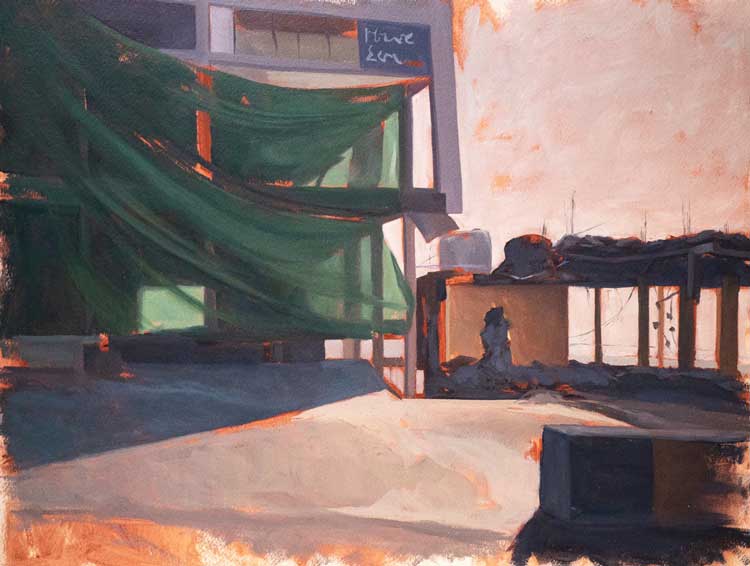
Title image: Aafia Ali Shah, Impression – Air, oil on paper 21.7 x 15.7 inches, 2024. Courtesy of the artist.
- Edward B. Tylor, Primitive Culture: Researches into the Development of Mythology, Philosophy, Religion, Art, and Custom, vol. 1 (London: John Murray, 1871), 1.
- Sana Arjumand, conversation with the author, November 10, 2025.
- Aafia Ali Shah, conversation with the author, September 29, 2025.
Cosima Brand
Cosima Brand is a Pakistan based contemporary art critic and writer. She holds a Masters degree on International Relations, specialising in Arab and Islamic Studies, from the University of Sydney. She has written and reviewed for several prominent Pakistani and international publications including ArtNow, DAWN, Nigaah Magazine, Asia Now Paris and a variety of online publications. Cosima lives and works on a farm outside Islamabad with her family, a multitude of chickens, goats, and cows, and a cat who keeps her lap warm as she writes.
There are no comments