
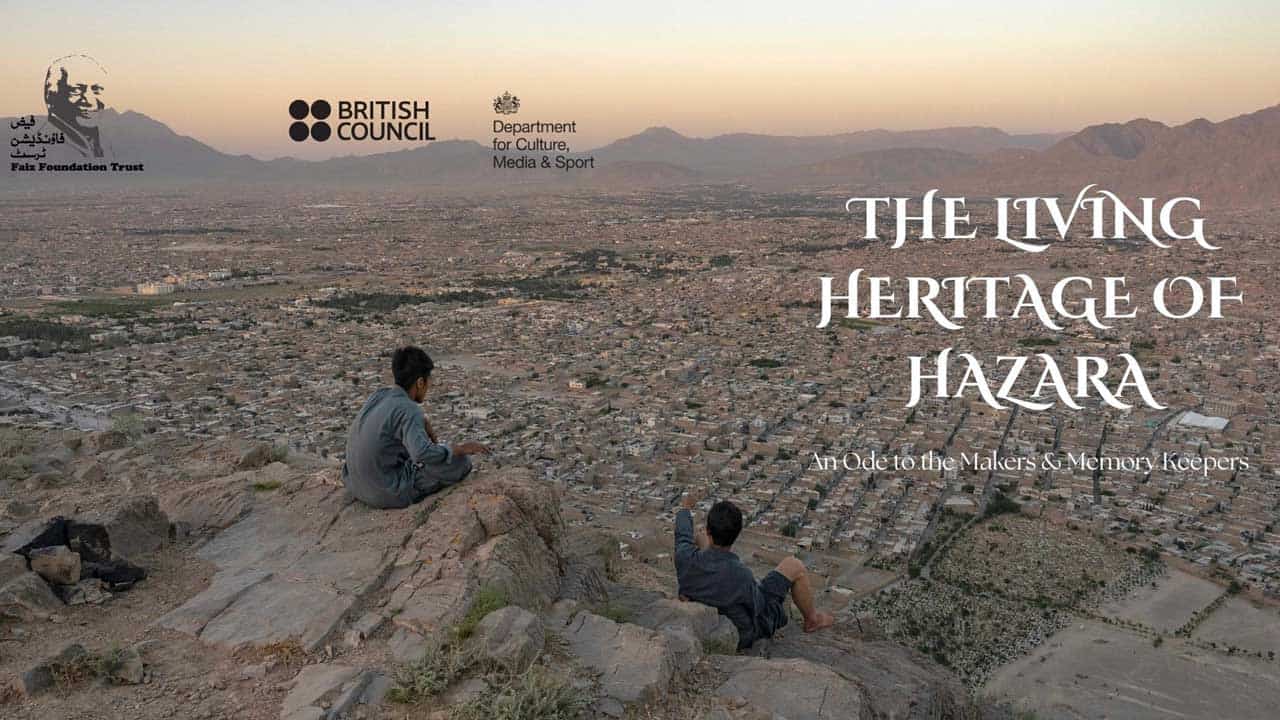
The book The Living Heritage of Hazara: An Ode to the Makers and Memory Keepers by Amina Ali is a vibrant celebration of the culture, cuisine, and musical traditions of the Hazara community. The Hazara are an ethnic group native to Afghanistan, where they have historically faced severe aggression. In Pakistan, the Hazara are a minority concentrated mostly in Baluchistan, and continue to face ethnically motivated hostility. However, the publication chooses resilience over victimisation, thus shaping its celebratory tone.
Published by Faiz Foundation Trust and supported by the British Council Cultural Protection Fund in partnership with the Human Rights Commission of Pakistan, The Living Heritage is an encapsulation of the community’s daily lifestyle. The coffee book’s six short chapters are supported by generous photographs that lavishly stitch warm and gripping real life stories. Memories, collected by the author via her conversations with the community folks, arise from the pages like the morning mist in the rugged Baluchistan mountains, showing how heritage lives beyond museums, in the pulse of daily life.
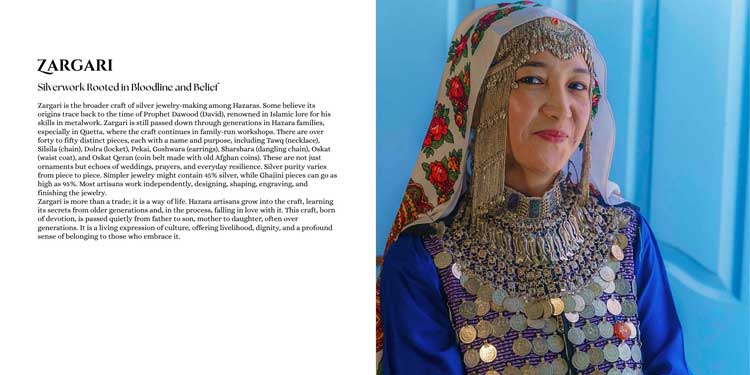
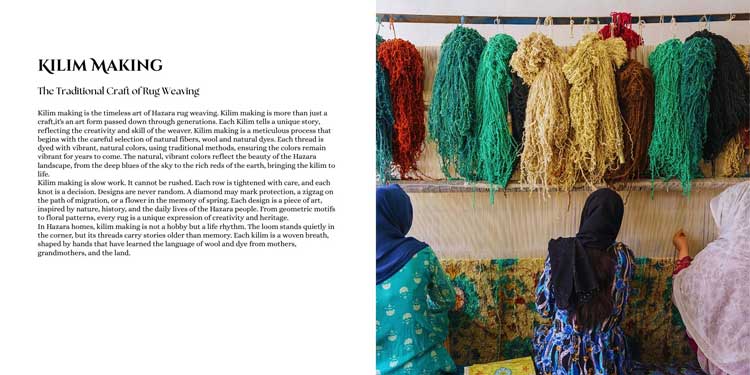
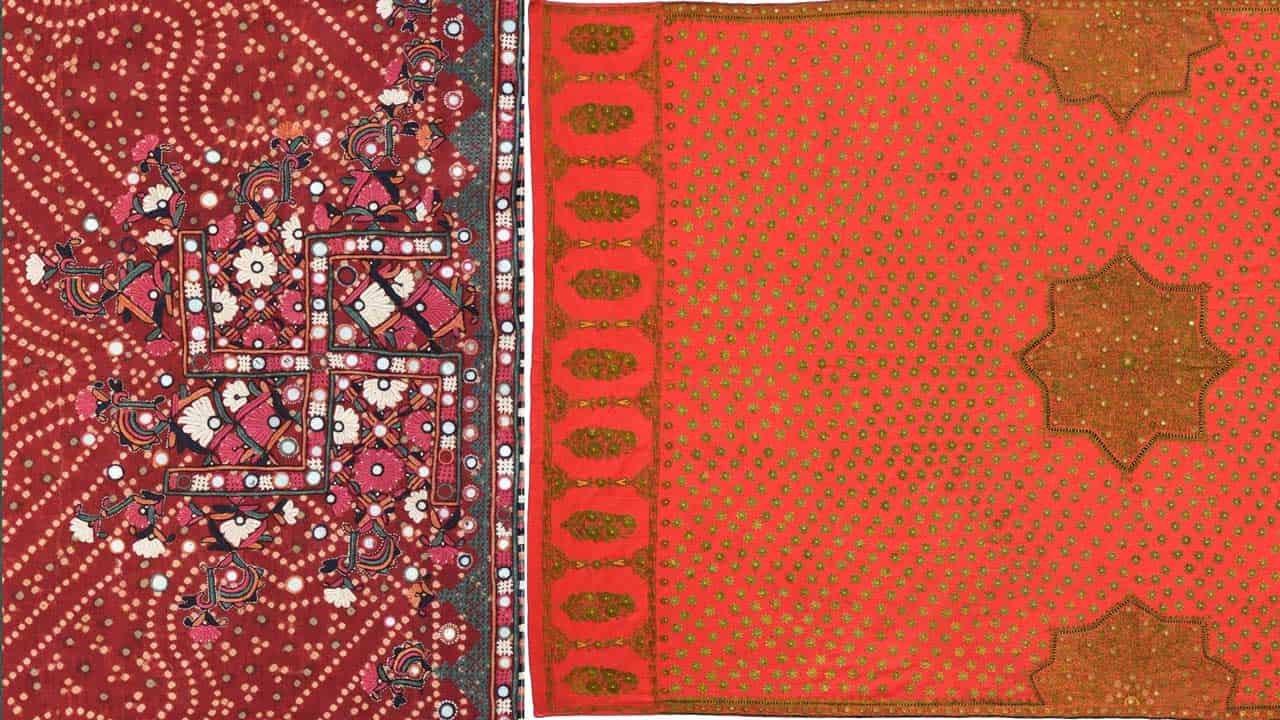
The first chapter examines local jewellery making practices, such as Sang Shanasi— the art and appreciation of stonework and Sawatkari— traditional silverwork. Ali describes these practices as a “vessel of belonging” in the community. Turquoise holds a special place among semi-precious stones here, accompanied by the belief that if someone wearing turquoise sits near a tandoor while naan is baking, the bread will melt inside the oven. The production of the Kilim, a traditional rug that involves Namyati Rung Saazi— the dyeing of wool— is similarly rooted in continuity, reflecting stories passed down through generations. Hazara women are also distinguished for their hand embroidery. From Khamak to Qabtumar, each piece is a stylistic rendering in thread.
Another chapter devoted to Hazara literature, brings together narratives of heroism, sacrifice, and renewal, with references to legendary heroes and mythical creatures from the epic poem Shahnameh by Persian writer Abul Qasim Ferdowsi (940-1025 CE). Literary themes reflecting morality and courage are also reflected in Hazara embroidery, jewellery design, and even lullabies, forming a cohesive visual and narrative tradition. Additionally, sport, music, song, and dance—the cultural heartbeat of the Hazara—are presented with pride.
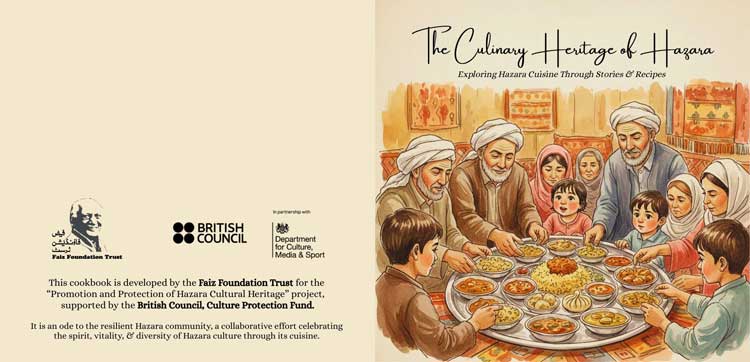
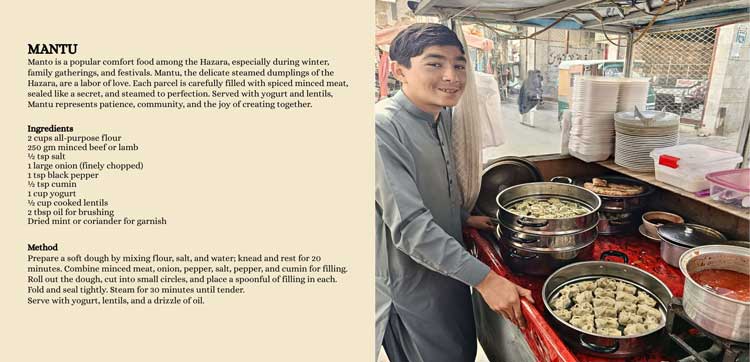
Accompanying this main volume is a smaller hardback titled The Culinary Heritage of Hazara, also authored by Amina Ali, which is a collection of recipes shaped by memory and instinct rather than formal measurement. Foods such as tikki bread— valued for both nourishment and cultural significance— and Boshragh, a preparation requiring no refrigeration, reflect practical knowledge. Though the sweet Halwa Samanak may require effort, simpler dishes like Sheeryakh remain staples. Ingredients including eggs, fruits, meat, vegetables, and kehwa are combined with flexibility to mark occasions, offer comfort, and reinforce bonds. The Majma, or communal tray, is central to the Hazara experience where sharing a meal becomes an act of inclusion. Other preparations such as Bolani, Yakhni, Shorba, and the tandoori naan are tied to specific occasions. Both books thus reflect how the Hazara heritage continues to be sustained through the ethos of these practices, safeguarded and practiced by the community.
The Living Heritage of Hazara: An Ode to the Makers and Memory Keepers and The Culinary Heritage of Hazara: Exploring Hazara Cuisine Through Stories and Recipes are written by Amina Ali. The books are published by Faiz Foundation Trust and supported by the British Council Cultural Protection Fund in partnership with the Human Rights Commission of Pakistan.
Title Image: Book cover
Photo credits: Ali Sarwari, Asif Khan, Amina Ali, and Haroon Raffi.
Nyla Daud
After three decades of working as Lahore-base editor for the SHE magazine, freelance contributions to national and international print media including book reviews, translating prose and poetry, serving as adjunct faculty in a LUMS Content Writing Program for two years, Nyla Daud now works at her own pace. Her books, including Dear House, a compilation of humorous articles about her family's growing years and Fire, Ether, Fragrance, a translation of a spiritually oriented Urdu novel are in publication. Grandmother to eight and a full-time homemaker, she now lives between Benahi, her Lahore home; and Shireen Kunj, her Abbottabad cottage where she periodically hosts live-in retreats for women on subjects as diverse as creative and scriptwriting, art, wellness, craft, and Sylvotherapy. With support from her husband Daud Zia, she has now ventured into entrepreneurship by running the Abbottabad cottage as a select BnB.
There are no comments