
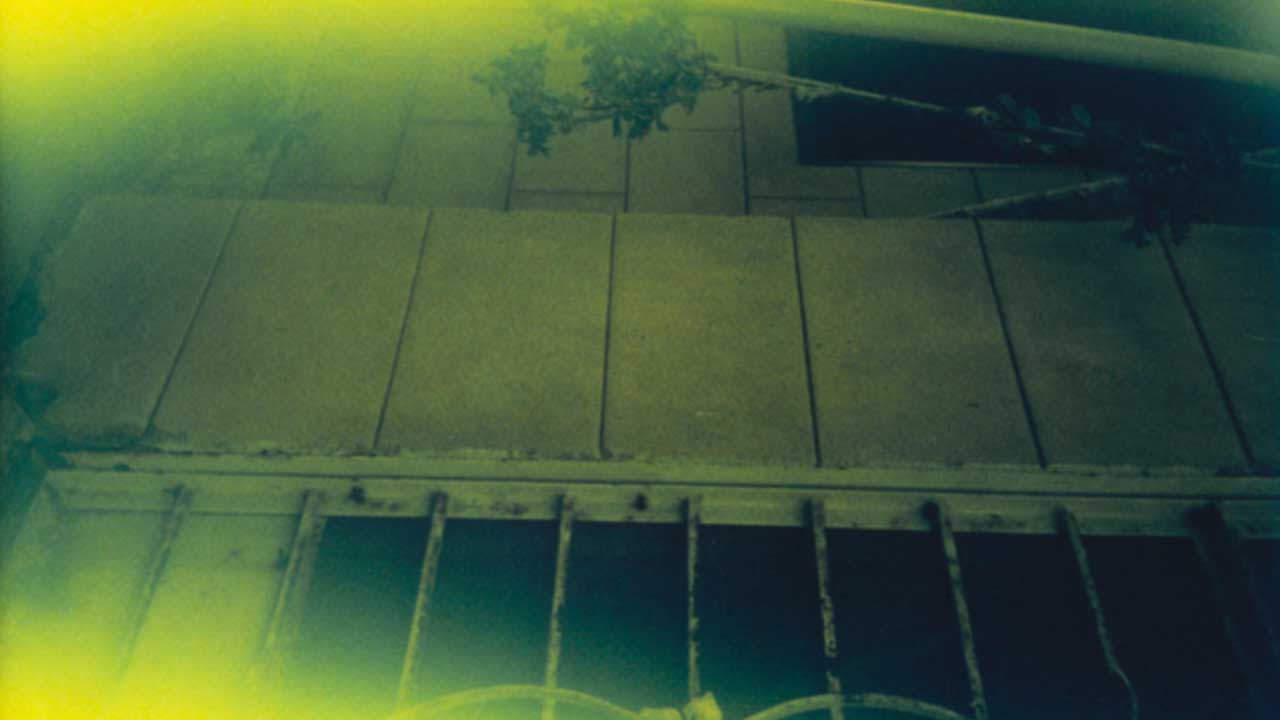
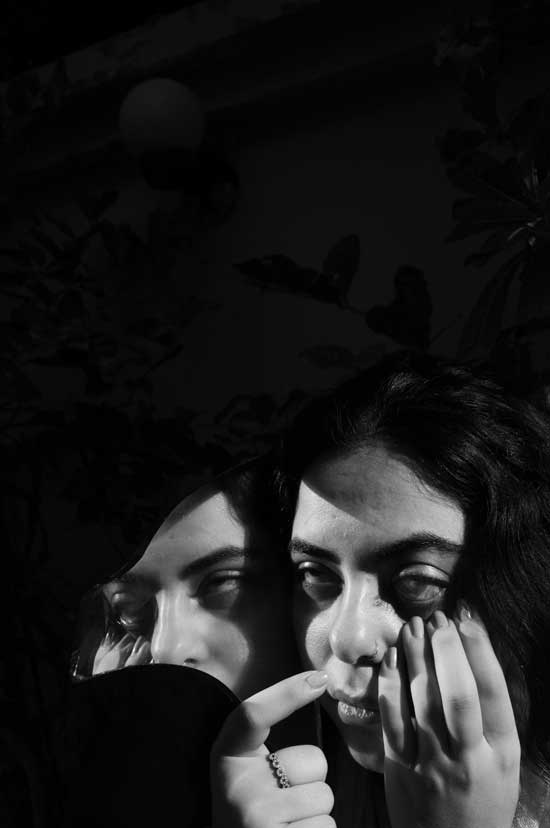
Abbas’ work feels unsettled in the best way, like memory that refuses to stay still. Her images move between black and white and color into clarity, between softness and contrast, between nearness and distance. She isn’t documenting events; she’s reconstructing emotional landscapes. Rather than presenting a scene as finished evidence, she lets it remain psychologically open. It reminded me of how Nan Goldin’s diaristic intimacy in The Ballad of Sexual Dependency1 or how Rinko Kawauchi’s Illuminance2 finds transcendence in the ordinary, except her resistance is specifically social. It’s about the quiet ways we push back against expectations. The way private memories become acts of survival.
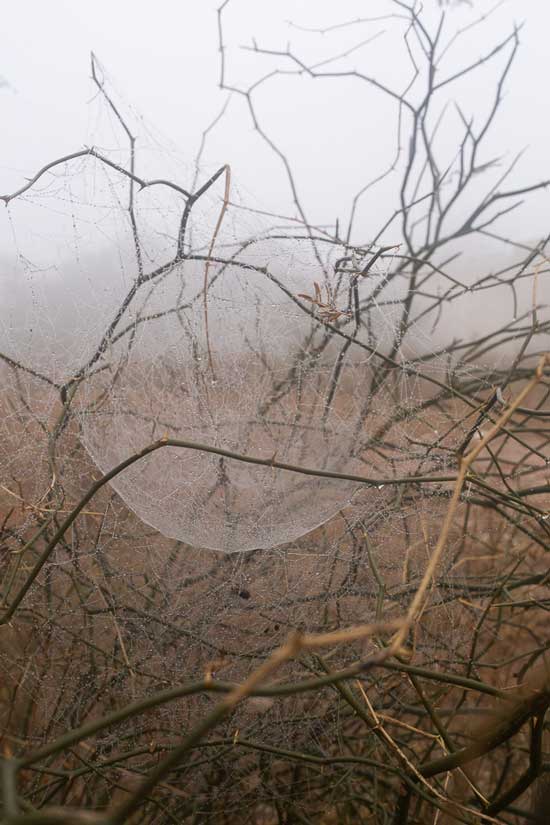
Hassan Gondal’s Kalla Teeshun hits differently. It is quieter, but heavier. Photographing the workers’ colony his family was forced to leave after the cement factory shut down, and then reopened without justice, he returns again and again to a place that is slowly erasing him. That idea unsettled me deeply: a place forgetting you.
His work made me think of Allan Sekula’s Fish Story3, especially in the way labor is never treated as an abstract economic category but as something lived through bodies, infrastructures, absences, and time. Gondal is not quoting that lineage; he is arriving at a related truth from within his own history. There is no spectacle in his work. No dramatic framing. Just the slow ache of displacement. The knowledge that someone else now occupies your absence.
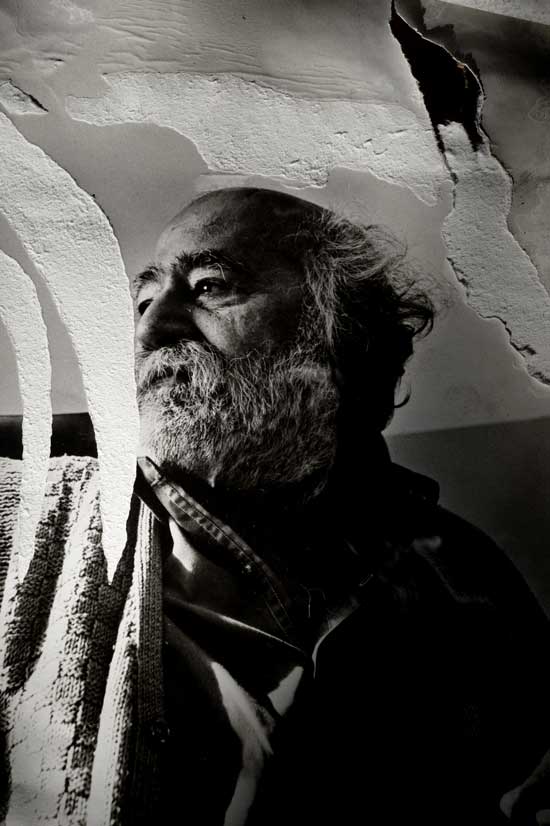
Arif Mahmood’s presence in the exhibition carries its own history. I have encountered his photographs for years in public and editorial contexts, where they often appeared large in scale and civic in feeling. Here, though, his resistance is painfully intimate. After a fire damaged his archives, he began re-photographing what survived, copying prints, salvaging fragments of writing from the 90s. Photographing photographs.
There is something profoundly philosophical in that gesture. This is not preservation in the heroic sense; it is an admission that preservation is always partial. It’s an acknowledgment that nothing lasts, but we resist anyway. His work reminded me of Christian Boltanski’s4 relationship with archives, or even Roland Barthes’ Camera Lucida5; the idea of photography as a confrontation with mortality, and the ache of what has been. Arif isn’t fighting impermanence. He’s standing inside it.
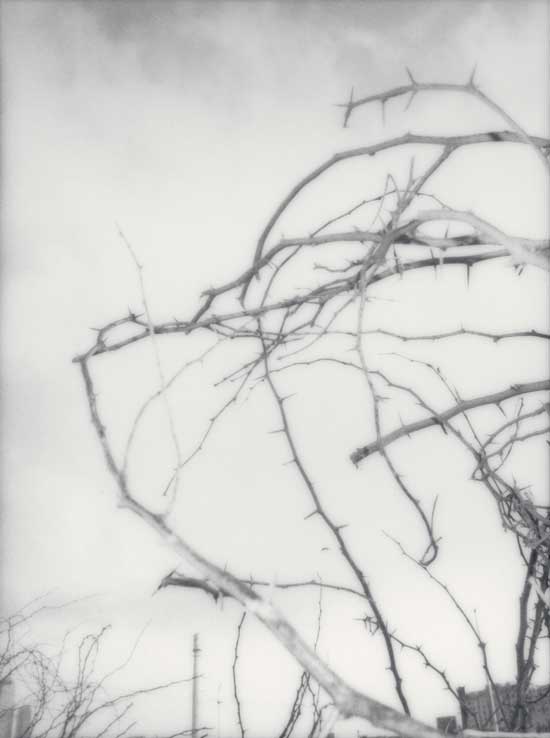
Marijnissen’s Diary of In-Between might be the emotional glue of the exhibition. Her small Polaroids imperfect, tactile, almost vulnerable in scale read like whispered notes to herself. Sixteen years of moving between Belgium and Pakistan, of forming chosen family, of navigating motherhood and loss, all distilled into fragments.
There’s a trace of Nan Goldin’s diaristic honesty there, yes, but Marijnissen’s gaze feels softer. Observational, but not detached. The Polaroid format itself resists polish. It resists spectacle. It insists on presence.
What moved me most about the exhibition, though, wasn’t any single body of work. It was the way they belonged together.
Four different identities. Four different techniques. Four very different stages of life. Yet nothing felt misplaced. Hassan’s softness would not survive in Arif’s archival austerity. Malika’s surreal tension would not exist in Wendy’s quiet diary. And yet in that space, they flowed.
That cohesion wasn’t accidental. Marijnissen and Abbas spoke about floor plans, mockups, long discussions across continents.6 The layering of wallpaper and stickers wasn’t decorative, it was conceptual. Images overlapping images. Stories sitting beside stories. Intimacy becoming structure.
That said, I’d be doing the show a disservice if I only celebrated it. There is a tension in the curatorial process worth sitting with rather than resolving. Marijnissen is a European photographer who chose Pakistan as a second home; Gondol is the son of workers the Pakistani industrial system displaced and then forgot. These are not the same relationship to place, to belonging, or to what “resistance” actually costs. And yet the curtain holds them in the same warm light. That is the exhibition’s bravest move, and its most unresolved one. Lucy Lippard, writing on the community-based practice, draws a distinction between solidarity and proximity: being in the same room is not the same as having the same stakes (Lippard, The Lure of the Local, 1997).7 The curatorial instinct here beautifully executed, is to find harmony. But in finding it so cleanly, it may have absorbed the friction the makes Gondol’s work most urgent. Hal Foster has written about the “archival impulse” in contemporary practice, the risk that gestures of preservation and collection become aestheticized, softening the political force of the material they hold (Foster, “An Archival Impulse”, October 2004). 8
And underneath all of this is something urgent: the desire to build a platform for documentary photography in Pakistan that values depth over trend. A fellowship. An archive. An institute. A place where young photographers can commit to long-term storytelling without being told that only commercial work matters.
In a country where people still sit on panels and ask, “Is photography art?”, this exhibition doesn’t bother arguing. It simply demonstrates. It shows what happens when photographers are honest with their form, when they photograph because they must, not because it sells.
As someone who is deeply drawn to portraiture, to the idea that no two faces, no two identities are ever the same, I saw this show as a portrait in itself. A portrait of four ways of seeing. Four ways of resisting. Not loudly. Not theatrically. But persistently.
Intimate Resistance doesn’t shout. It doesn’t demand. It stays with you quietly. And maybe that is its greatest strength. Because sometimes resistance isn’t a raised fist. Sometimes it’s choosing to keep looking.
‘Intimate Resistance’, a group show held at The VASL Gallery, Karachi, on the 25th of November 2025, featuring works from Wendy Marijnissen, Malika Abbas, Arif Mahmood & Hassan Gondal. Co-curated by Wendy Marijnissen and Malika Abbas.
Title Image: Untitled, Wendy Marijnissen, digital photograph, 2025
- Nan Goldin, The Ballad of Sexual Dependency, Tate: https://www.tate.org.uk/art/artworks/goldin-the-ballad-of-sexual-dependency-t15556
- Rinko Kawauchi, Illuminance: https://rinkokawauchi.com/en/works/194/
- Allan Sekula, Fish Story, Tate Research: https://www.tate.org.uk/research/tate-papers/18/production-in-view-allan-sekulas-fish-story-and-the-thawing-of-postmodernism
- An Appreciation of Christian Boltanski, Brilliant Artist, My Friend By Leslie Camhi: https://www.mariangoodman.com/usr/library/documents/main/vogue-december-14-2021-.pdf
- Roland Barthes, Camera Lucida, Hill and Wang/Macmillan: https://us.macmillan.com/books/9780374532338/cameralucida/
- In-person conversation between the author and Wendy Marijnissen and Malika Abbas at Espresso, Dolmen Mall, Karachi, 15 December 2025.
- Lucy R. Lippard, The Lure of the Local (The New Press, 1997)
- https://www.jstor.org/stable/3397555
Nomaan Bhatti

Nomaan Bhatti is a multi-disciplinary visual artist and educator who was born and raised in Karachi, Sindh. He graduated in Fine Arts from Karachi School of Arts in 2002 and in 2004 moved to London, UK for his higher studies where he completed his master’s degree in film making from Kingston University. Nomaan has exhibited his work on several occasions and has a number of publications to his name. He held his first solo exhibition titled ‘Evolving Selves’ at the fine art gallery at IVS in October 2024. He has taught as an Assistant Professor in the Communication Design department at Indus Valley School of Art & Architecture as well as Habib University, Bahria University, The Millenium Universal College among others.
There are no comments