
“I will polish shoes, but I won’t do engineering. I will paint.” -Ismail Gulgee 1
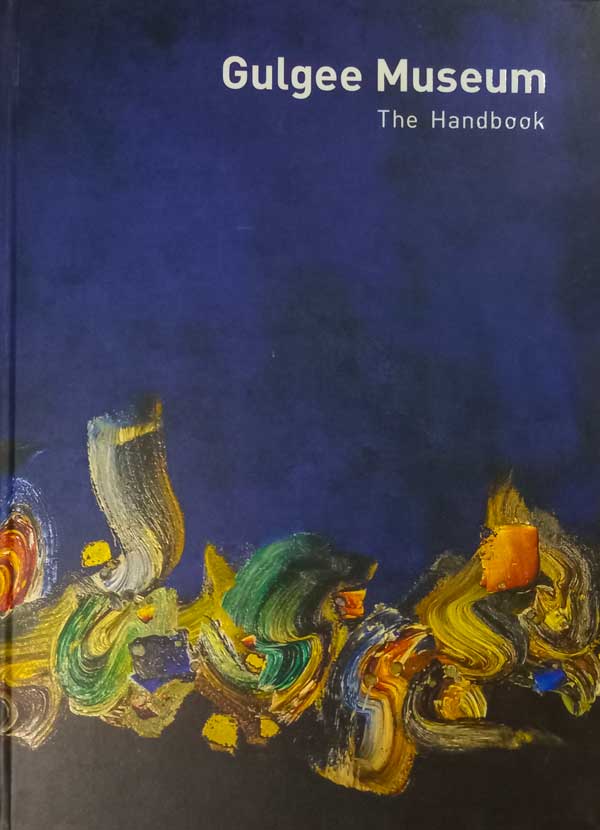
Pakistani artist Ismail Gulgee’s art practice has often been read biographically or categorized as decorative, leaving it overly romanticized and overlooked. The new publication Gulgee Museum – The Handbook, curated by Amin Gulgee and edited by John McCarry is a distinctive compendium that aims to fill this gap and demystify Gulgee’s practice.
“Gulgee was an octopus, an enigmatic creature fluid and constantly in motion” 2 writes his son Amin in his poetic and anecdotal curatorial note. In the essay titled “The Man of Many Letters,” art critic Quddus Mirza refutes the myth of art schoo 3l, writing how Gulgee was not trained at an art institution, yet he produced work that broke barriers between tradition and modernity. Another essay titled “Text and Context: Analyzing Gulgee’s Abstract Calligraphic Paintings” by Atteqa Ali traces the origins of the calligraphic and abstract form to critically explore Gulgee’s modernist paintings. The writer addresses the popular understanding that calligraphy was created out of a religious restriction towards drawing the human and animal form. Rather, Ali shows that Gulgee’s abstract calligraphy was a declaration of admiration of God as he transcribed Quranic verses in a gestural manner.
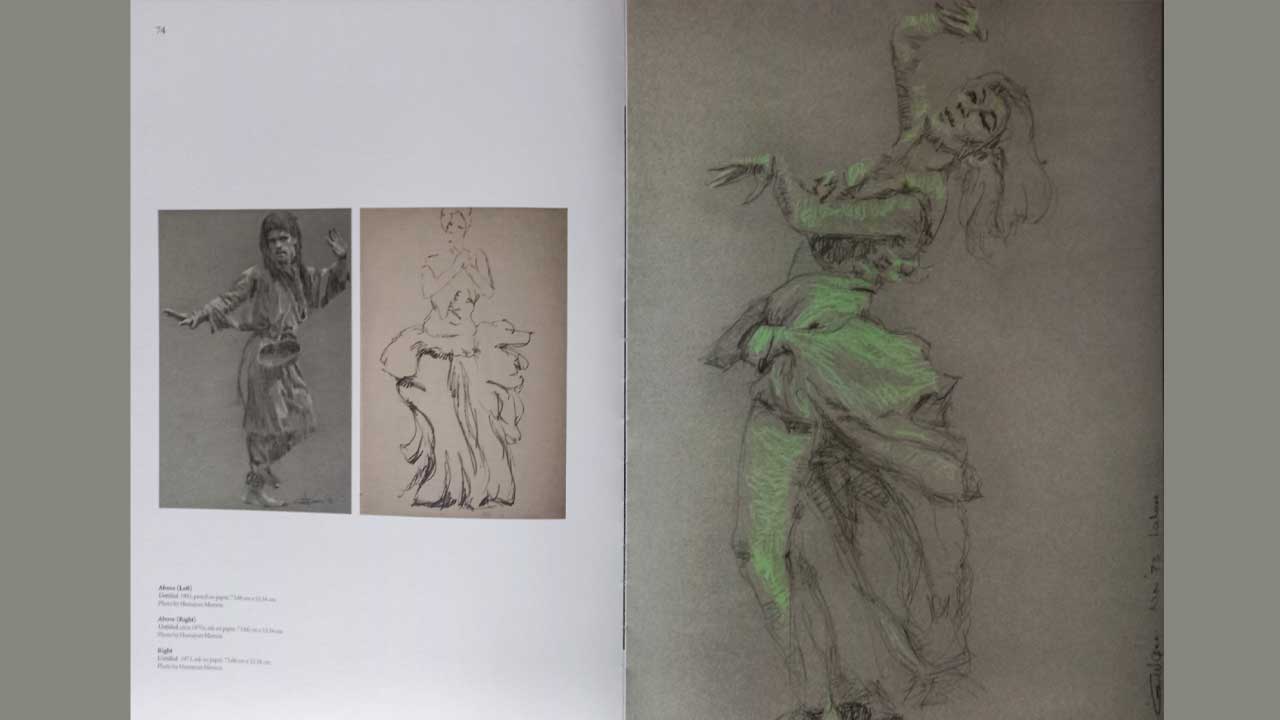
Providing theoretical underpinnings to the artist’s portraiture practice, art historian Nageen Shaikh’s essay ‘The Networked Gulgee’ explores institutional meditations and gifting as a driving force behind the artist’s thriving practice, through the Actor-Network Theory. Curator and educator Zarmeene Shah’s essay ‘Calligraphic Abstraction and the Work of Ismail Gulgee’ traces the movement of calligraphic abstraction from the 1950s to 70s. The book also includes wall texts from the museum and personal photographs from Gulgee’s family. This set of writing is significant because previous catalogues published on Gulgee’s practice[i] have not focused on personal and intimate contexts. In ‘Zaro’s Room’, Amin Gulgee writes about his mother’s commitment to Gulgee’s work, especially the handling of the commercial side of his practice. Through these interjections, we see how Gulgee consistently engaged with line, form, and movement. The artist had an observatory approach with strong perception about the world. This has been brought forth to the reader through this section in a very pictorial and engaging fashion. Additionally, The Handbook also includes QR codes that take the reader to audio narrations in Urdu. This section of the book addresses the museum’s core focus; preservation of the artist’s dynamic oeuvre.
In ‘Thoughts from the Architect’, Samina Anjarwalla recounts the construction of the museum space, emphasizing the careful manipulation of light and the development of a modern aesthetic designed to minimize distraction from Gulgee’s vibrant works. Together, these contributions, alongside the personal and archival material, expand the reader’s understanding of Gulgee’s practice beyond individual works, bringing attention to the networks, contexts and people that shaped his artistic life and legacy.
Overall, while The Handbook offers a substantial and engaging contribution to the documentation of Gulgee’s practice, some sections could have benefited from further development. Shaikh’s essay, particularly in its discussion of the material significance of lapis lazuli in the artist’s works, offers valuable analysis, while its theoretical framework could have been made more accessible. Shah’s essay provides useful context on the development of calligraphic abstraction, and could have been further enriched through a broader engagement with Middle Eastern and South Asian art practices. Similarly, Anjarwalla’s account offers insight into the construction and aesthetic considerations of the museum, although a brief introduction to the museum’s inception, aims and archival processes could have further complemented the publication. These additions, however, do not detract from the significance of The Handbook, which brings together personal, artistic and institutional perspectives to create a more nuanced understanding of Gulgee and his place within the history of modern art in Pakistan. As an important contribution to the preservation and continued study of his diverse oeuvre, the publication will remain a valuable resource for scholars, students, art institutions and audiences engaging with Gulgee’s work.
Gulgee Museum: The Handbook (2025) is curated by Amin Gulgee, edited by John McCarry, and published by Lightstone Publishers.
Title Image: Spread from the book.
- Gulgee Museum: The Handbook, curated by Amin Gulgee, edited by John McCarry, Lightstone Publishers, pp. 283, 2025.
- Gulgee Museum: The Handbook, pp. 6
- That attending an art school is an essential requirement to become a real artist.
Jabeen Qadri
Jabeen Qadri is a Karachi-based artist, book illustrator and writer. Her creative practice is rooted in existential inquiry and sensory meaning-making, stemming from modern-day alienation. Through drawing and expanded drawing, she explores symbolic imagery across literature, visual culture, myth and esotericism. She has facilitated multiple workshops engaging community through her intuitive drawing process. Jabeen has contributed to ArtNow Magazine, Femme Art Review and Pencil Magazine, and serves as an Art Editor for The Missing Slate.
There are no comments