
The Degree Show for the Masters of Visual Arts program at the National College of Arts showcased the works of eleven artists. Artists enrolled in the program often have some experience exhibiting, while others have prolific careers with regular shows at prominent galleries within Pakistan and beyond. The program pushes artists to break out of their comfort zone and produce works that will expand their practices in new directions. Raw, unfettered critiques go hand-in hand with recognising unimagined potential. The program is an opportunity to devote time and space to a practice and watch it shed its cocoon. As faculty, we have front row seats to both the growing pains, and the breakthroughs.
I oversee the thesis writing classes for the program, and am given rare glimpses into the motivations and inspirations that guide the artwork being created in the studio. I find myself paying particular attention to the decisions that the cohort is making about aesthetics, while also trying to glean overarching themes that are emerging. This year there was a marked interest in producing works that exhibited technical prowess. Painting, drawing and printmaking took center-stage, and detailed, labour-intensive artworks lined the hallways of the Tollington block.
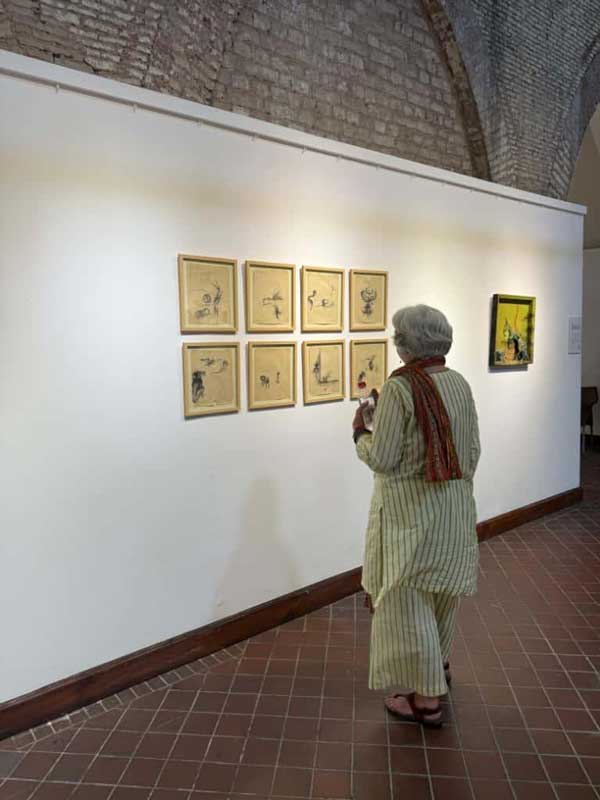
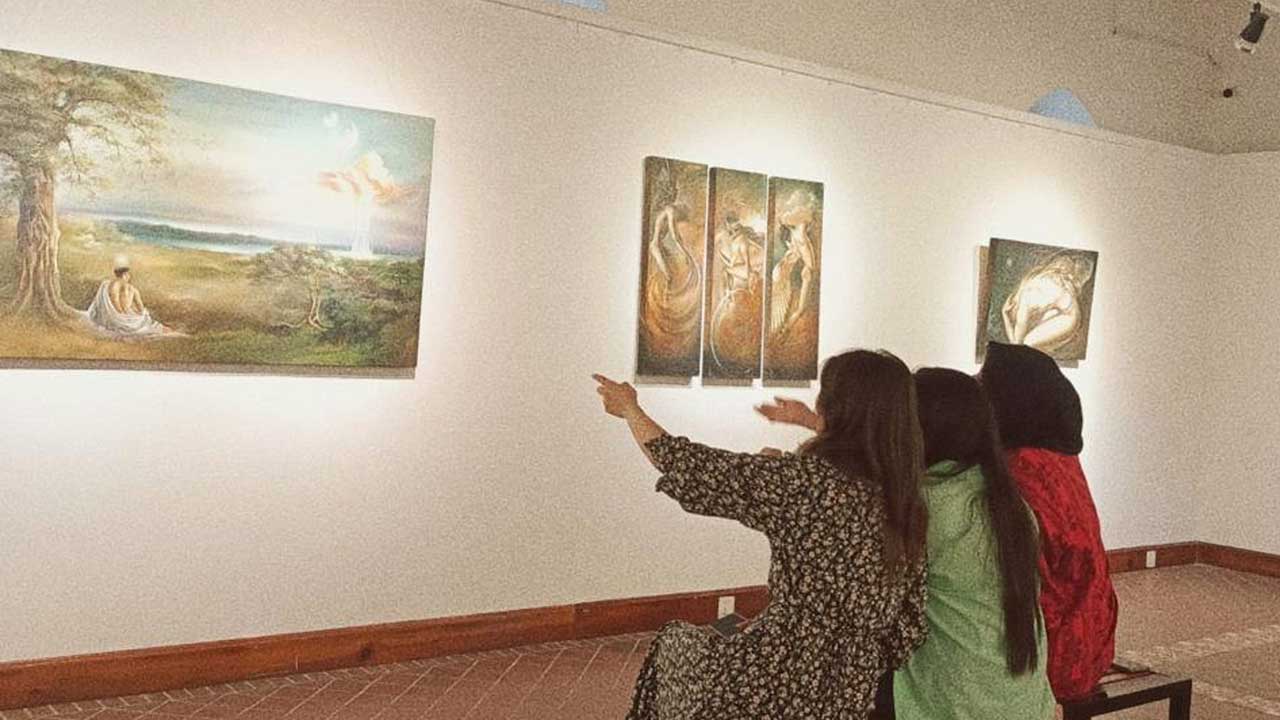
Thematically, there were a few areas of interest. A struggle between mortals and mythology was evident in the works of a some of the members of the graduating class. Anushka Rustomji referenced ancient Persian texts that attribute the genesis of human life to the Rhubarb plant, creating large graphite drawings on canvas. Usman Allaudin explored the symbolism of the colour blue in both Hindu and Sufi visual traditions in his intimate frescos. Mubashir Qayyum drew inspiration from the depictions of Greek mythologies within western art history, using his expertise as a painter to create portraits and landscapes that read as other-wordly, particularly in a city like Lahore.
Visualizations of the subconscious found many mediums in the exhibition; from the richly pigmented textile works by Noor Ul Huda to the emotionally charged prints analysing self-perception by Abdul Musawir Shabbir. The free-flowing translucent draperies in Kalsoom Iftikhar’s paintings provided a counterpoint to the layered monochromatic text-based works by Ameera Tahir. Revealing fragile aspects of their inner worlds, these artists walked the fine line between maintaining privacy and seeking connection.


Huma Iftikhar depicts symbols of power, often working with chairs as representations of unspoken hierarchies. In her work, miniature paintings, collage and laser-cut grids play with negative space to create the comforting patterns that we can slip into while maintaining these power structures. Muhammad Waqas Ahmad’s blurred impressions of Lahore were reminiscent of depictions of the fast pace of cities by other artists. Borrowing both from photographic and drawing traditions, the works added to an ever-expanding dialogue investigating time and space.
Conceptualizing the narratives embedded within domestic interactions, Asma Ikram contended with the expectations women face, while Areej Aslam examined her relationship with her mother. Ikram’s delicate, minimalist, miniature paintings depicted sewing needles, scissors and text providing visuals for words that have created fissures. Across the room Aslam’s multidisciplinary investigations, in photography, print, and collage recognised the voids and brims of the unspoken emotions that are carried through generations.
As a group, the class of 2025 exhibited wonderful resilience and camaraderie, often coming together to lobby for their shared interests. It is not a given that a group of artists in the program will find support and engagement from their peers, and I think this particular batch was particularly fortunate to be able to form these bonds that will serve them well beyond graduation.
The Degree Show for the graduating class of the Masters of Visual Arts program at the National College of Arts opened at the Tollington Block in Lahore on September 19, 2025. The show was inaugurated by Professor Dr. Murtaza Jafri. Associate Professor, Shireen Bano Rizvi, is the coordinator for the program, and Ali Baba and Zobia Yaqoob serve as permanent faculty. All the artists from the graduating class are active on social media platforms, where you can follow the developments of their practices.
Title Image: Gallery visitors at the Masters of Visual Arts Degree Show in front of works by Mubashir Qayyum, 2025. Image credit: Mubashir Qayyum
Ambereen Siddiqui

Ambereen Siddiqui is an artist, independent curator and educator based in Lahore. Her research interests include contemporary art from South Asia and its diaspora, as well as lens based practices. Siddiqui earned her MFA from the Rhode Island School of Design and her BA from the joint Art and Art History Program at the University of Toronto and Sheridan College. Before moving back to Pakistan, Siddiqui served as the Education and Outreach Officer and later the Executive Director of SAVAC (South Asian Visual Arts Center), an artist-run center in Toronto. Siddiqui currently teaches at the Masters of Visual Arts department at the National College of Art, Lahore.


There are no comments